
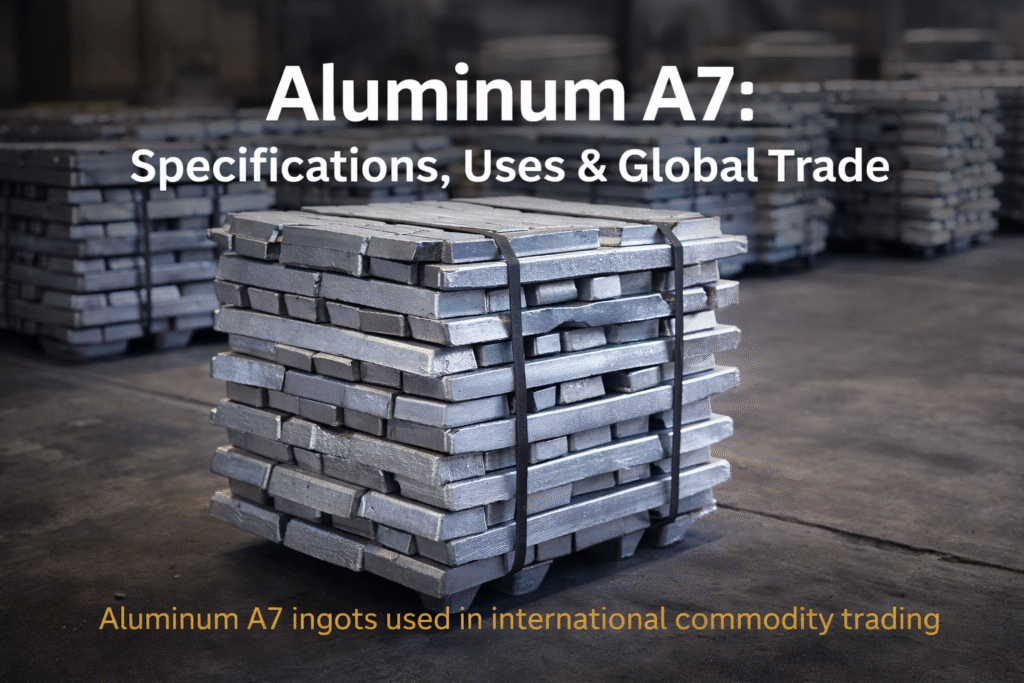
Aluminum A7 is one of the most widely traded primary aluminum grades in the global commodities market. Known for its high purity and versatility, Aluminum A7 is commonly used across multiple industrial sectors, including construction, transportation, packaging, and electrical manufacturing.
As demand for lightweight and recyclable materials continues to grow, Aluminum A7 remains a key reference product in international aluminum trading.
Aluminum A7 refers to primary aluminum with a minimum purity of 99.7%. It is typically produced in the form of ingots, sows, or T-bars and serves as a raw material for downstream aluminum products.
What Is Aluminum A7?
Aluminum A7 refers to primary aluminum with a minimum purity of 99.7%. It is typically produced in the form of ingots, sows, or T-bars and serves as a raw material for downstream aluminum products.
Due to its standardized specifications, Aluminum A7 is commonly referenced in international trade contracts and market discussions.
Common Applications of Aluminum A7
Aluminum A7 is used as a base material in a wide range of industries, including:
- Construction and infrastructure
- Automotive and transportation manufacturing
- Electrical conductors and cables
- Packaging and consumer goods
- Industrial equipment and machinery
Trade Parameters in Aluminum A7 Transactions
In international commodity markets, Aluminum A7 transactions are typically governed by seller mandates and are subject to specific commercial parameters. These may include origin, quantity ranges, delivery terms, and payment conditions.
All commercial terms are defined exclusively by the seller and remain subject to market availability, logistical considerations, and contract negotiation between the parties.
Risk Considerations in Aluminum Trading
Aluminum trading involves several operational and commercial risks, including mandate authenticity, documentation accuracy, logistical coordination, and counterparty reliability.
Proper verification of sellers and buyers, as well as structured facilitation, plays a critical role in reducing exposure to fraud and execution risk in aluminum transactions.
The Role of Trade Facilitation and Consulting
Independent commodity trade consulting and facilitation help qualified buyers and sellers navigate the aluminum market more efficiently. By supporting due diligence processes and ensuring transparent communication, facilitators contribute to more secure and structured transactions.
Conclusion
Aluminum A7 continues to be a strategic commodity within global trade due to its high purity, broad industrial usage, and stable demand. Understanding market practices, trade parameters, and risk factors is essential for parties involved in international aluminum transactions.
Disclaimer
This article is provided for informational purposes only and does not constitute an offer to sell or a solicitation to buy any commodity. Consultoria SYO Col SAS does not own, sell, or invoice Aluminum A7 and acts solely as an independent consulting and facilitation firm.