
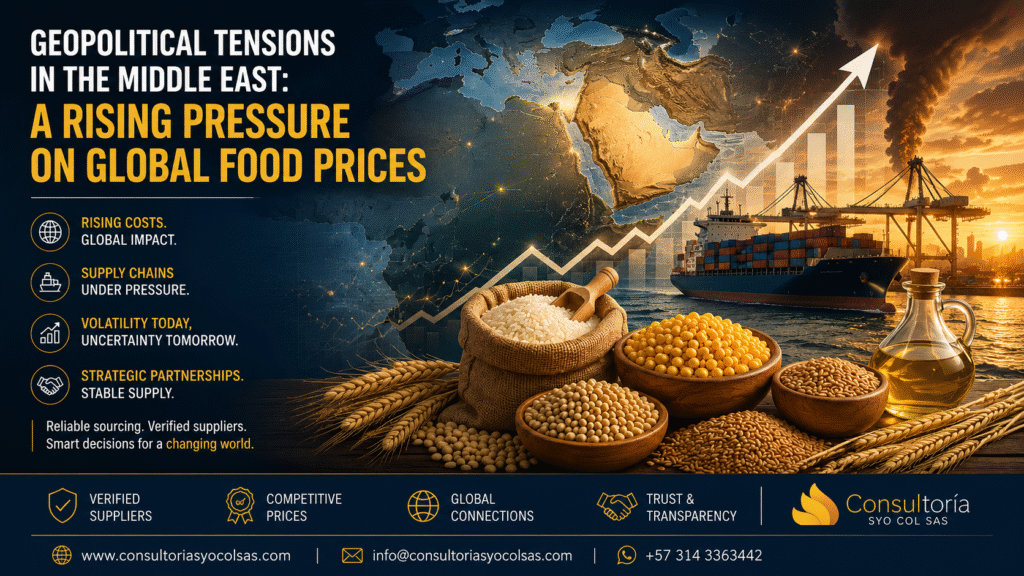
The global food industry is once again facing significant uncertainty as geopolitical tensions in the Middle East continue to influence international trade, energy markets, and global logistics. For importers, exporters, distributors, and commodity traders, understanding these developments is essential for making informed purchasing and supply chain decisions.
Although the Middle East is not the world’s largest agricultural producer, it occupies one of the most strategic positions in global commerce. Any disruption affecting this region can rapidly influence transportation costs, shipping schedules, insurance premiums, and ultimately the international prices of agricultural commodities.
Why the Middle East Matters to Global Food Markets
International trade depends heavily on secure maritime routes.
Two of the world’s most critical shipping corridors—the Strait of Hormuz and the Red Sea—connect producers, suppliers, and buyers across Europe, Asia, Africa, and the Americas.
When geopolitical instability affects these corridors, the consequences often include:
- Higher marine insurance costs
- Increased freight rates
- Longer shipping routes
- Vessel schedule disruptions
- Reduced shipping capacity
- Greater volatility in CIF prices
These factors directly influence the landed cost of food products worldwide.
Agricultural Commodities Most Affected
Several internationally traded commodities are particularly sensitive to geopolitical events because of their dependence on transportation and energy costs.
Among the most affected products are:
- Sugar ICUMSA 45
- Wheat
- Corn
- Soybeans
- Soybean Meal
- Rice
- Barley
- Palm Oil
- Sunflower Oil
- Canola Oil
- Soybean Oil
- Powder Milk
- Frozen Chicken
- Chicken Wings
- Chicken Drumsticks
- Chicken Paws
- Urea Fertilizer
- DAP Fertilizer
As fuel prices increase, every stage of the supply chain becomes more expensive—from production and processing to refrigeration, transportation, warehousing, and final delivery.
Freight Costs Continue to Rise
Ocean freight has become one of the largest variables in international commodity pricing.
Shipping companies continuously evaluate geopolitical risks when determining freight rates. As uncertainty grows, additional costs are passed throughout the logistics chain.
Importers purchasing on CIF terms may experience:
- Higher freight quotations
- Increased insurance premiums
- Longer delivery lead times
- More volatile weekly pricing
Companies that depend on stable procurement costs should monitor these developments carefully.
Why Strategic Procurement Matters
Periods of geopolitical uncertainty require disciplined purchasing strategies rather than reactive decisions.
Successful international buyers typically focus on:
- Working with reliable suppliers
- Monitoring market developments weekly
- Securing competitive prices whenever market conditions allow
- Maintaining flexible sourcing strategies
- Planning purchases before additional logistics costs arise
In today’s global environment, timing has become as important as pricing.
Market Outlook for the Second Half of 2026
While global supply chains continue operating, ongoing geopolitical developments suggest that market volatility is likely to remain elevated throughout the coming months.
Commodity prices will continue responding to:
- Energy market fluctuations
- Freight market conditions
- Shipping security
- Currency movements
- International demand
- Regional political developments
Companies that remain informed and proactive will be better positioned to manage risk and protect profitability.
Consultoría SYO COL SAS: Supporting International Commodity Buyers
At Consultoría SYO COL SAS, we closely monitor global agricultural commodity markets to provide our clients with current market intelligence and professional commercial support.
Our objective is to help importers, distributors, and international buyers make informed decisions through reliable sourcing solutions and transparent commercial processes.
Whether you are looking for Sugar ICUMSA 45, Wheat, Vegetable Oils, Frozen Chicken, Fertilizers, or other internationally traded commodities, our team is ready to support your procurement requirements.